- Geekflare Newsletter
- Posts
- Why AI Still Makes Things Up
Why AI Still Makes Things Up
[INSIDE] AI hallucinations aren’t bugs, they’re a design limitation.
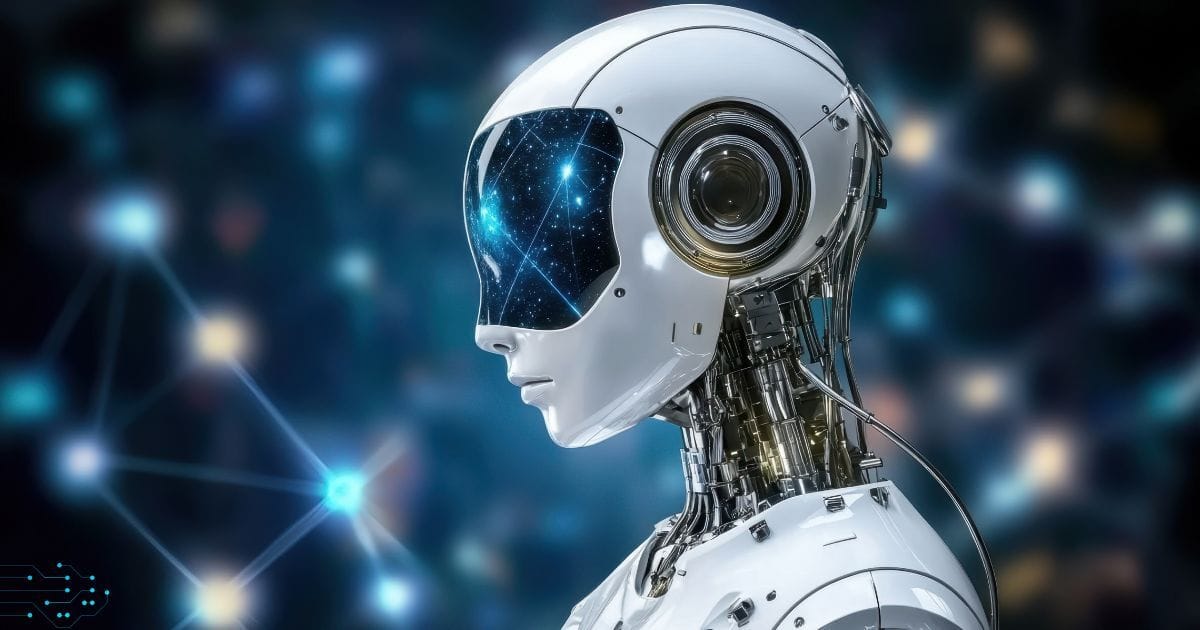

If you’ve used AI tools long enough, you’ve probably seen this happen.
You ask a simple question.
The answer sounds confident.
But parts of it are completely wrong.
This problem is called AI hallucination. And despite rapid progress in AI, it’s still very much unsolved.
Let’s break down why hallucinations happen and why they’re so hard to eliminate.
First, what is an AI hallucination?
An AI hallucination happens when a model generates information that sounds correct but isn’t true.
This could be:
A made-up fact
A wrong date or statistic
A fake source or citation
An answer that looks logical but has no real basis
The key thing to understand is this:
AI is not intentionally lying.
It’s doing exactly what it was trained to do.
The core reason: AI predicts words, not facts
Most modern AI models work by predicting the next most likely word based on patterns in data.
They don’t:
Understand truth
Verify facts in real time
Know what they don’t know
If a question looks similar to something in its training data, the model will try to generate a confident-sounding answer—even if it doesn’t have the correct information.
From the model’s perspective, a fluent answer is better than no answer.
Why “just add fact-checking” doesn’t solve it
This sounds simple, but it’s not.
Here’s why:
Training data is massive and imperfect
AI models are trained on large datasets that include outdated, conflicting, or incorrect information.Models don’t have built-in truth awareness
They don’t know which sources are authoritative unless explicitly constrained.Real-time verification is expensive and slow
Checking every claim against trusted databases increases cost and latency.Many questions don’t have clear answers
Especially in areas like law, medicine, or fast-changing tech.
So while tools like retrieval systems help, they don’t fully eliminate hallucinations.
Why bigger models don’t fix the problem
Larger models are generally better, but they’re not immune.
In fact:
Bigger models can hallucinate more convincingly
Confidence increases faster than accuracy
Errors become harder for users to detect
This is why hallucinations are especially risky in:
Healthcare
Finance
Legal advice
Enterprise decision-making
A confident wrong answer can be worse than no answer at all.
Why this problem is fundamentally hard
At a deeper level, hallucinations exist because:
Language is probabilistic, not deterministic
Truth is contextual and domain-specific
Human knowledge itself is incomplete and evolving
AI models don’t have a built-in concept of ground truth. They approximate it using patterns.
Fixing hallucinations fully would require:
Better data curation
Stronger alignment techniques
Reliable external knowledge systems
Clear limits on what models should answer
All of this is actively being worked on—but it’s not a quick fix.
So… will hallucinations ever go away?
Short answer: Not completely.
What will improve:
Fewer hallucinations in well-defined tasks
Better refusal when the model isn’t confident
Stronger grounding with trusted data sources
But as long as AI generates language based on probability, some level of hallucination will remain.
The real challenge is making AI:
Know when it’s unsure
Say “I don’t know” more often
Be transparent about uncertainty
Multi Model Comparison

With Geekflare Connect’s Multi-Model Comparison, you can send the same prompt to multiple AI models like GPT-5.2, Claude 4.5, and Gemini 3 at once. Their responses appear side-by-side in a single view, making it easy to compare quality, tone, and accuracy. This helps you quickly decide which model gives the best output for your specific task, without switching tabs or losing context.
Why AI Is Bad at Saying “I Don’t Know”
Cheers,
Keval, Editor
Reply