- Geekflare Newsletter
- Posts
- Why AI Needs So Much Computing Power
Why AI Needs So Much Computing Power
[INSIDE] It’s not just about big models
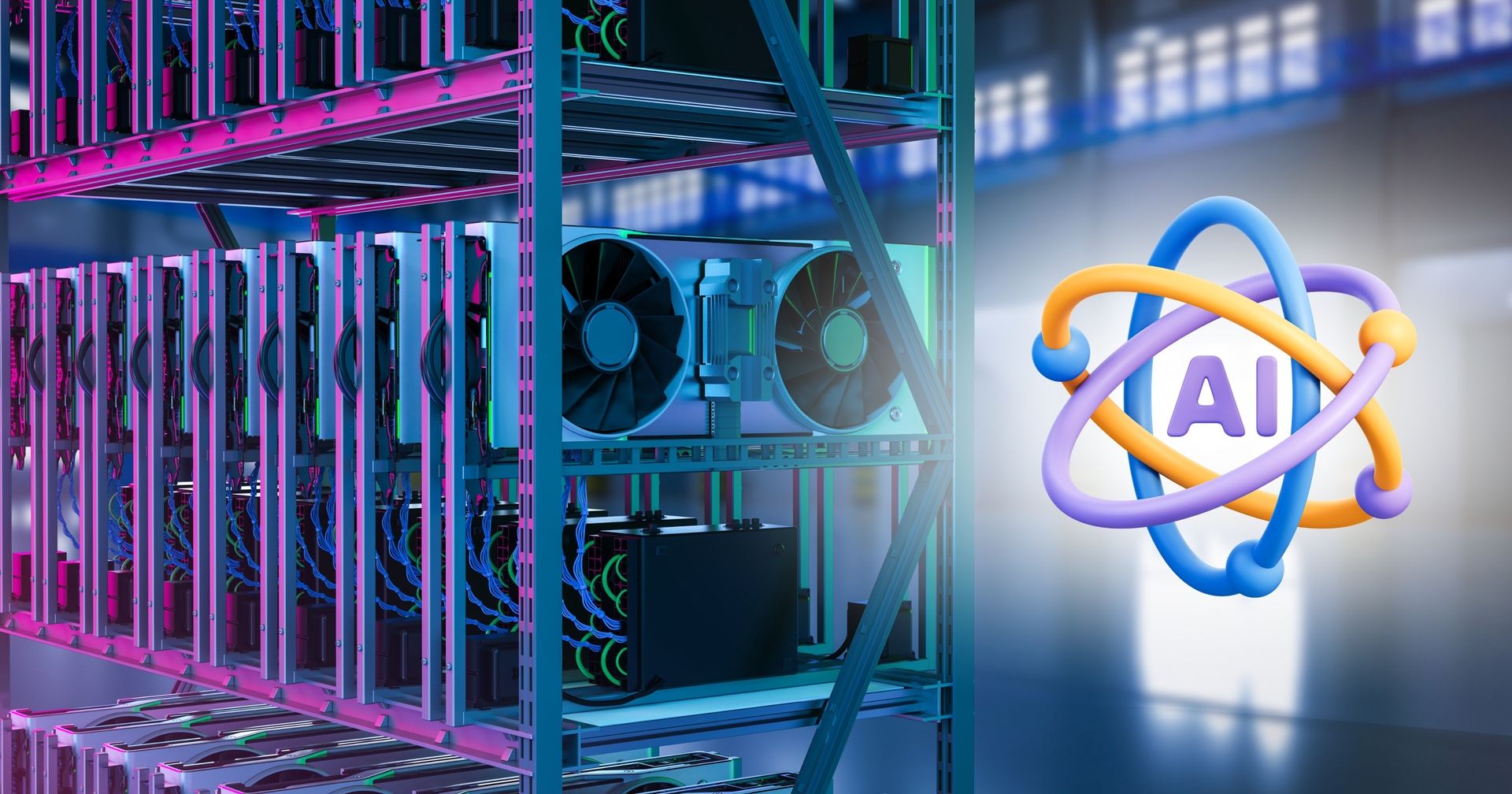

AI feels effortless on the surface.
You type a prompt.
You get an answer in seconds.
But behind that response is a level of computing that traditional software has never required at this scale.
Understanding why AI needs so much compute helps explain many things people are confused about today, high costs, limited access, slower rollouts in enterprises, and why only a few companies dominate advanced AI.
Let’s break it down properly.
AI doesn’t execute logic. It performs massive math
Traditional software runs instructions written by humans.
AI doesn’t.
Modern AI models are essentially large mathematical systems trained to predict outcomes based on patterns. Every word, image, or action generated by AI comes from layers of matrix calculations involving billions of numerical parameters.
Nothing is “looked up” the way a database works.
Everything is computed.
Even a simple response requires:
Multiple neural network layers
Large matrix multiplications
Continuous probability calculations
This is why AI workloads are fundamentally different from normal applications.
Training AI is one of the most compute-intensive tasks in computing
Training a modern AI model means adjusting billions, or even trillions, of parameters by repeatedly processing vast datasets.
This involves:
Running the same data through the model thousands of times
Performing trillions of floating-point operations
Coordinating computation across thousands of GPUs
Each training run can last weeks or months and consumes enormous amounts of electricity.
This isn’t speculation. It’s why:
Only a small number of companies can train frontier models
Training costs can reach tens or hundreds of millions of dollars
Model improvements now depend as much on infrastructure as research
Training AI isn’t just software development. It’s industrial-scale computing.
Inference is cheaper, but it doesn’t scale easily
Inference is what happens after training, when users actually interact with AI.
One request isn’t expensive.
Millions of requests per day are.
Each prompt triggers:
Real-time computation across the entire model
Memory access for billions of parameters
Hardware acceleration to meet latency expectations
As models get larger and responses get longer, inference costs rise quickly.
This is why AI companies now focus heavily on:
Token limits
Response length controls
Tiered pricing models
Inference has quietly become one of the biggest cost drivers in AI.
GPUs matter because AI is parallel by nature
AI workloads involve doing many calculations at the same time.
GPUs are designed for exactly this kind of parallel computation. They can process thousands of operations simultaneously, which makes them far more suitable than CPUs for neural networks.
But this creates several constraints:
High-end GPUs are expensive
They consume large amounts of power
Cooling and data center design become critical
Supply can’t scale overnight
This is why compute availability, not ideas, is often the limiting factor in AI progress.
Bigger models aren’t just slower, they’re harder to sustain
As models grow:
Memory requirements increase sharply
Data movement becomes a bottleneck
Energy costs rise non-linearly
Hardware failures become more likely
This is why the industry is shifting focus from “bigger is better” to:
Model efficiency
Smarter architectures
Distillation and compression
Task-specific models
Raw scale alone is no longer enough.
Why compute shapes who wins in AI
High compute requirements have real-world consequences:
Advanced AI concentrates among a few large players
Smaller teams rely on hosted models instead of building their own
AI access becomes tied to infrastructure ownership
Cost controls influence what features get released
In many ways, compute has become the new gatekeeper of AI capability.
The deeper takeaway
AI needs so much computing power not because it’s poorly designed, but because:
Pattern learning is computationally expensive
Intelligence emerges from scale and repetition
Real-time generation requires massive parallel processing
This also explains why:
AI progress feels fast but hits limits
Costs don’t drop as quickly as expected
Efficiency is now as important as accuracy
The future of AI won’t be defined only by smarter models—but by who can make intelligence cheaper, faster, and more sustainable.
Multi Model Comparison

With Geekflare Connect’s Multi-Model Comparison, you can send the same prompt to multiple AI models like GPT-5.2, Claude 4.5, and Gemini 3 at once. Their responses appear side-by-side in a single view, making it easy to compare quality, tone, and accuracy. This helps you quickly decide which model gives the best output for your specific task, without switching tabs or losing context.
Why AI Output Depends on the Model You Choose
Cheers,
Keval, Editor
Reply